Terminal Infrastructure & Tank Farm Layout
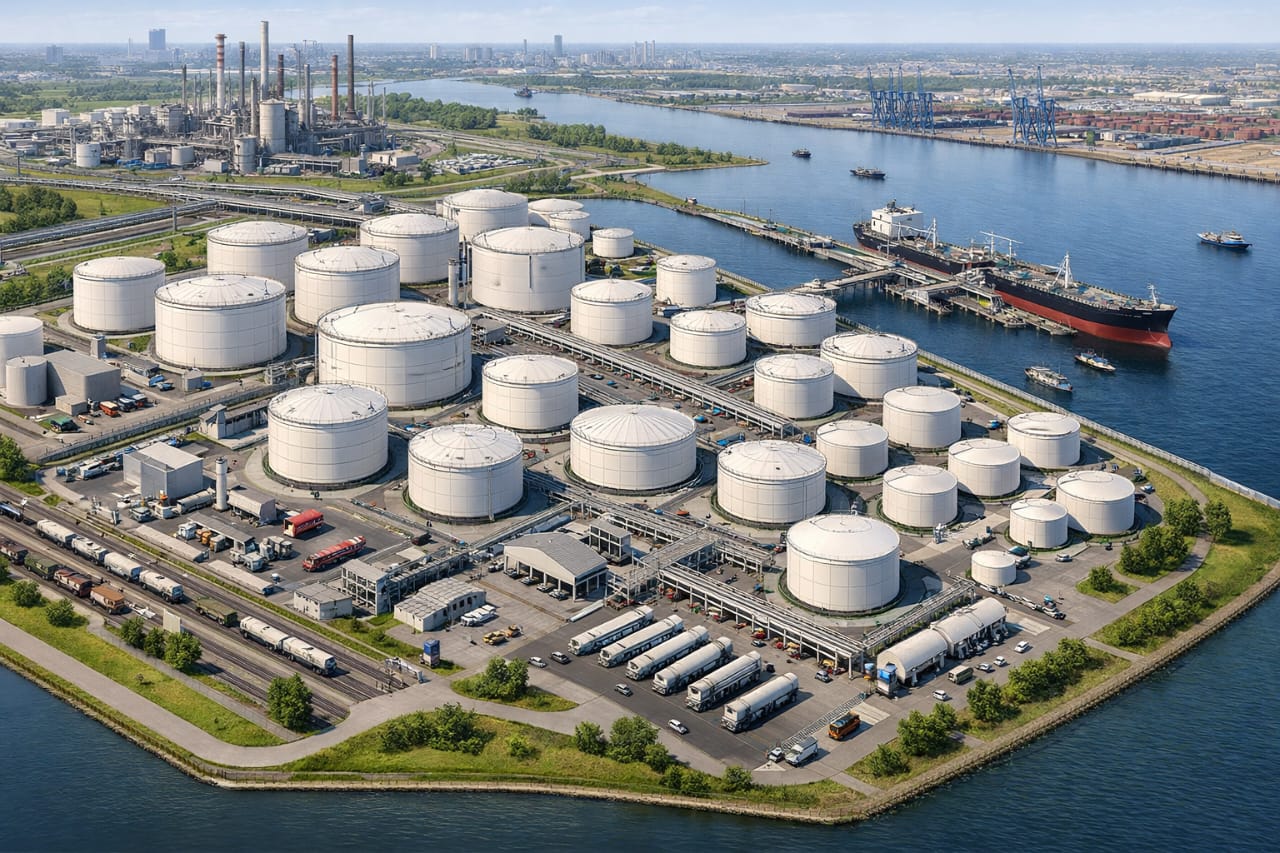
Our Rotterdam tank farm is engineered for large-scale liquid bulk storage and optimized cargo handling. The facility integrates modern tank design, automated monitoring systems, and extensive pipeline connectivity to support efficient and secure product movement across international supply chains.
Infrastructure Highlights
Marine Jetty Operations
The Rotterdam terminal features deep-water marine infrastructure designed to accommodate large crude carriers and product tankers. Our jetty facilities support efficient cargo transfer operations with high-capacity pumping systems and advanced monitoring technology.
VLCC Handling
Up to 320,000 DWT
Draft Depth
Up to 22 meters
Pumping Rate
12,000 m³ per hour
Turnaround
24–36 hours
| Vessel Type | Max Capacity | Average Turnaround | Typical Cargo |
|---|---|---|---|
| VLCC | 320,000 DWT | 24 – 36 Hours | Crude Oil |
| Product Tanker | 50,000 DWT | 12 – 18 Hours | Refined Products |
| Chemical Tanker | 25,000 DWT | 8 – 12 Hours | Chemicals |
| Barges & Coastal Vessels | 5,000 DWT | 4 – 6 Hours | Regional Distribution |
Product Range & Storage Infrastructure
Our terminal is designed to handle a diverse portfolio of liquid bulk commodities serving global energy markets, petrochemical industries, and renewable fuel supply chains.
| Product Category | Typical Products | Storage Type | Temperature Control |
|---|---|---|---|
| Crude Oil | Light, Medium, Heavy Crude | Large Floating Roof Tanks | Ambient / Heated |
| Refined Petroleum Products | Gasoline, Diesel, Jet Fuel | Fixed Roof Tanks | Temperature Controlled |
| Chemicals & Petrochemicals | Solvents, Feedstocks | Specialized Chemical Tanks | Controlled Environment |
| Biofuels | Biodiesel, Ethanol | Dedicated Biofuel Tanks | Temperature Controlled |
| Base Oils & Lubricants | Industrial Lubricants | Insulated Tanks | Heated Storage |
Pipeline Network & Multimodal Logistics
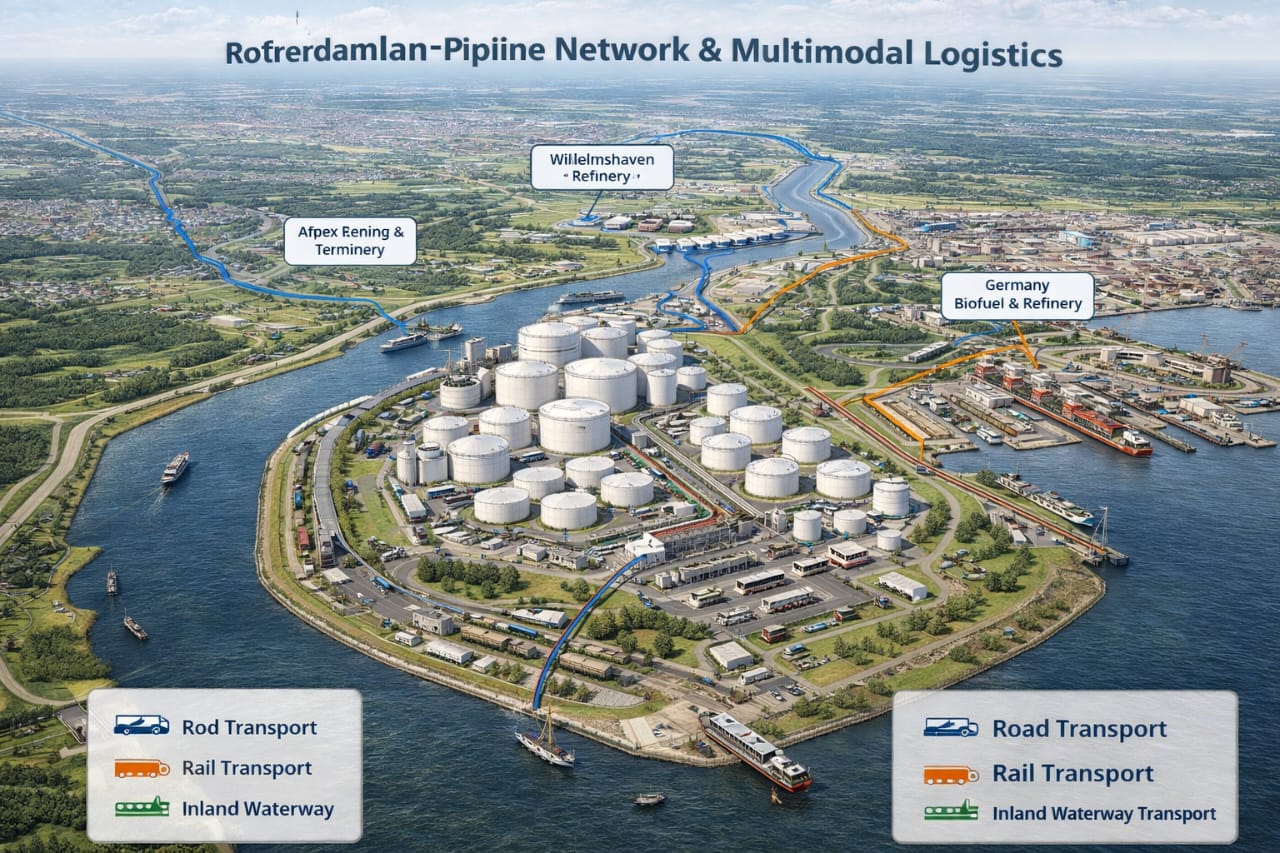
Our Rotterdam terminal is strategically integrated into Europe’s energy logistics network through extensive pipeline infrastructure and multimodal transport connectivity. This integrated system enables efficient product transfer between marine terminals, refineries, distribution centers, and inland markets.
Logistics Connectivity
| Transport Mode | Typical Capacity | Operational Range | Primary Use |
|---|---|---|---|
| Pipeline | Up to 12,000 m³/hr | Regional Refineries | Bulk Transfer |
| Rail Transport | 60–100 m³ per wagon | Europe-wide | Industrial Distribution |
| Road Tank Trucks | 20–40 m³ per truck | Regional Markets | Retail Fuel Supply |
| Inland Waterway Vessels | 1,000–3,000 m³ | EU Waterways | Bulk Regional Transport |
End-to-End Energy Supply Chain
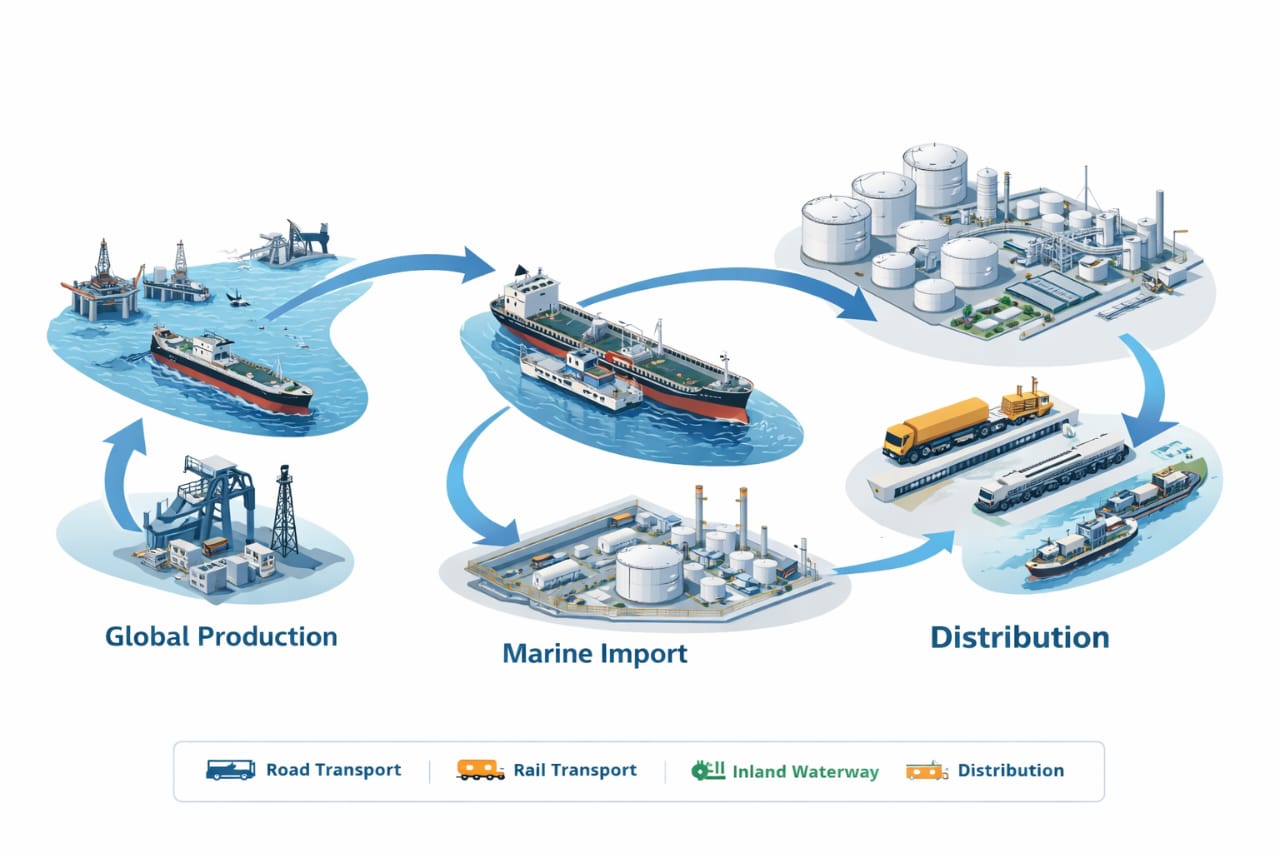
Our terminal serves as a key infrastructure link connecting international energy production with European demand centers. Through coordinated logistics operations, we ensure the seamless flow of liquid bulk commodities from source to final destination.
Global Production
Crude oil and energy commodities are sourced from global production regions and transported to Rotterdam through international shipping routes.
Marine Import
Vessels berth at our deep-water jetties where high-capacity pumping systems transfer cargo directly into terminal storage infrastructure.
Storage & Handling
Products are safely stored, blended, and monitored using automated tank management systems ensuring quality and inventory accuracy.
Distribution
Products are distributed via pipelines, rail networks, trucks, and inland vessels to refineries, industrial users, and energy markets across Europe.